
Making verification, review, and risk explicit.
Orbital Methods Index publishes practical reference materials for verification, review, and risk in complex engineered systems.
“What We Publish” — Product-Oriented Orientation
Our publications are deliberately focused on making implicit verification, review, and risk reasoning explicit and usable.
Verification Coverage Maps (VCMs & VRPs)
Subsystem-specific references showing how verification confidence is typically constructed.
Verification Field Tools
Assorted high-signal verification references for real-time discussion and acceptance preparation—without prescribing requirements or outcomes.
Standards Comparison Documents
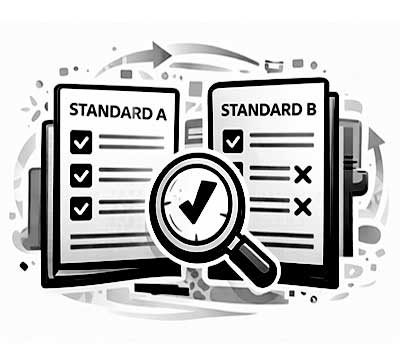
Side-by-side perspectives on how different standards approach verification and confidence.
Review Preparation Guides
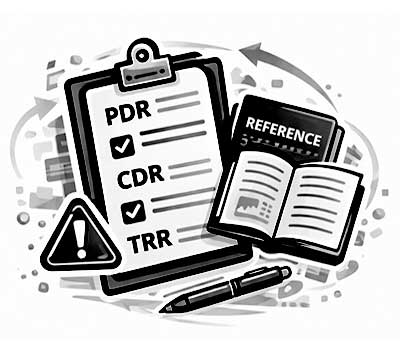
Practical guidance for navigating PDR, CDR, TRR, and similar reviews without overcommitment.

OMI Flagship Publications.
Core reference materials used to clarify verification coverage, review expectations, and acceptance testing.
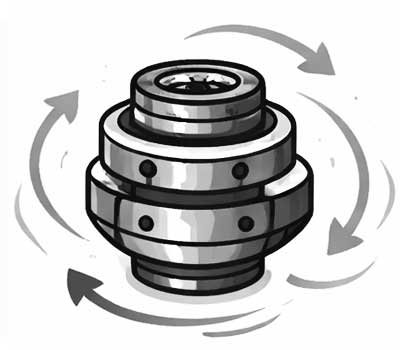
VCM — Momentum / Reaction Wheels
A verification confidence map for reaction wheel performance constructed across test, analysis, inspection, calibration, heritage, and engineering judgment — without asserting compliance or sufficiency..

VRP — Industrial Automation Systems
A Coordinated Set of Verification Support Artifacts for Acceptance Testing for Industrial Automation Systems.
Verification Language Framing Guide — (FREE Download)
A free verification awareness guide explaining how common verification terms are typically interpreted during technical reviews—helping teams anticipate review friction before it arises.
“Who This Is For” — Self-Qualification.
Orbital Methods Index publications are intended for people who are directly responsible for understanding, communicating, or signing off on verification and review decisions in complex engineered systems.
They are most useful for:
- Engineers preparing for formal technical reviews (PDR, CDR, TRR, and similar)
- Verification and V&V leads responsible for evidence, coverage, and review readiness
- Chief engineers and technical authorities on complex or safety-critical systems
- Program managers responsible for technical sign-off and risk communication
- Teams working across aerospace, space, robotics, or automation domains
If your role requires you to clearly explain verification confidence, identify gaps early, or communicate uncertainty responsibly, these materials are likely to be relevant.
These publications assume familiarity with formal engineering reviews and verification practice.
What OMI Materials Are — and Are Not.
These publications are designed to support understanding and communication around verification and review — not to replace existing processes or authority.
These materials are:
- Reference resources intended for orientation, preparation, and context
- Review-centric, focused on how verification is discussed and evaluated
- Evidence-focused, emphasizing how confidence is constructed across artifacts
- Subsystem-specific, grounded in real engineering domains
- Designed to clarify, not prescribe decisions or outcomes
They are not:
- Requirements or requirement substitutes
- Checklists or step-by-step procedures
- Certification or qualification templates
- Compliance claims or sufficiency assertions
- Regulatory guidance or authority
These materials are intentionally scoped to reduce ambiguity without creating obligation, allowing teams to use them safely alongside existing standards, processes, and reviews.
Why OMI References Exist.
In complex engineering programs, verification confidence is often formed implicitly — through experience, informal discussion, and reviewer intuition rather than a single, explicit artifact.
This works well when teams are stable and expectations are shared. It becomes harder when systems are novel, responsibilities are distributed, or reviews involve new participants with different assumptions.
These references exist to make that implicit structure visible and communicable. They provide a common way to surface how verification confidence is typically constructed, where assumptions tend to accumulate, and how review discussions are framed — without requiring changes to existing standards or processes.
The intent is not to replace judgment, but to support clearer conversation when continuity, context, or shared experience cannot be assumed.

